MOUNTTRACKER EARLY ACCESS — TEST DATA — NO LIVE PAYMENTS
MountTracker

WHAT MAKES GOOD TAXIDERMY GOOD?

Learn what to look for. Bring better questions.

Taxidermy combines anatomy, preparation and artistic judgment. This guide helps you notice the details and have a clearer conversation with a taxidermist while respecting that good work can take more than one style.
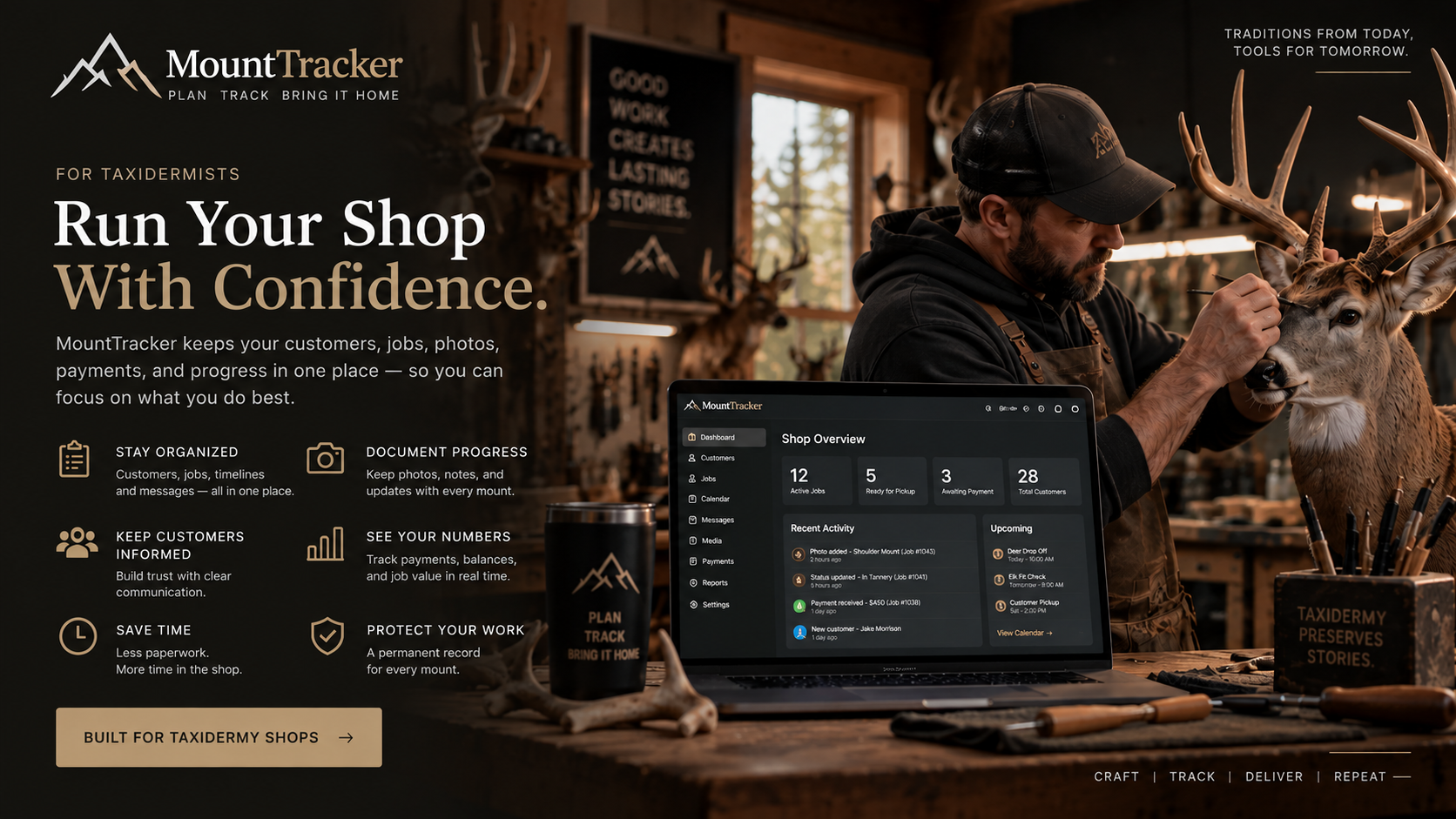
Taxidermist working carefully on a mount in a traditional studio
The shop remains the authority on the specimen, materials and final mount.

A USEFUL WAY TO LOOK

Observe the whole mount, then study the details.

01

Start with the silhouette

Notice proportion, pose and how the mount reads from its normal viewing distance.

02

Study the expression

Look at the relationship between eyes, ears, head turn and the character of the pose.

03

Notice transitions

Follow hair patterns and the changes around the face, neck, brisket and shoulders.

04

Compare a body of work

A portfolio helps you understand a shop’s range and its consistent approach over time.

CRAFT DETAILS

Six areas worth a closer look.

Open any topic for observations and a practical question to bring to your taxidermist.

01Anatomy and proportion

A mount reads as a whole before any single detail stands out. Look at how the head, neck, shoulders and chosen pose relate to one another.

Things to notice

  • A silhouette that feels natural for the species and pose
  • A neck and shoulder transition that supports the intended turn
  • Proportions that remain convincing from more than one viewing angle
02Eyes and expression

Small choices around the eyes can change the entire expression. Different poses can call for alert, relaxed or directional character.

Things to notice

  • Eyes that work together rather than drawing attention separately
  • Lids and surrounding detail that suit the chosen expression
  • An expression that stays believable from the front and side
03Ear position and balance

Ear position helps tell the story of the pose. Forward, relaxed, rotated and asymmetric choices can all be intentional.

Things to notice

  • Ear direction that supports the head turn and expression
  • Clean transitions where the ears meet the head
  • Balance that feels deliberate, including when the ears are not symmetrical
04Hair patterns and transitions

Hair direction and natural markings help define the face, throat, brisket and shoulders.

Things to notice

  • Hair patterns that flow through changes in direction
  • Transitions that do not distract from the overall form
  • Natural markings used as part of the animal’s individual character
05Preparation and finishing

Much of the work that supports a finished mount is easy to overlook. Preparation and finishing affect how cleanly the details come together.

Things to notice

  • Clean edges and transitions around eyes, nose, mouth and ears
  • A finish that supports the natural texture rather than overpowering it
  • Careful treatment of seams, repairs and attachment points
06Reading a portfolio

One image can show a strong result; a body of work shows how a shop approaches different animals, poses and challenges.

Things to notice

  • Several examples relevant to the mount you are considering
  • Work photographed from useful angles and at useful distances
  • A consistent level of care while still allowing artistic variation

BEFORE INTAKE

A clear plan starts with a good conversation.

Your taxidermist can resolve the technical form, fit and production decisions. You can arrive with the story, the space and the visual direction you want to preserve.

Explore a visual direction
  1. Which pose and turn will suit the specimen and where it will hang?
  2. What reference photos or measurements would be useful?
  3. How should the specimen be cared for before it reaches the shop?
  4. What decisions need to be made at intake, and what can wait?
  5. How will progress, changes and expected timing be communicated?
Craft has room for judgment.

Species, specimen, pose, materials and artistic style all affect the finished work. Use this guide to notice and ask—not to reduce a taxidermist’s work to a checklist.